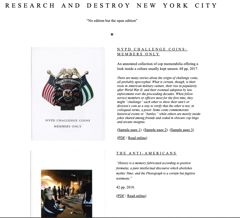
"Radical, majority QPOC collective making DIY research-based zines focusing on police violence: a history of the 2015 Baltimore Uprising told through teens' tweets; a 150-year compendium of cats attacking cops. Our zines draw from primary source documents and other archival materials, photocopied and bound by us and always sold pay-what-you-wish."-- 2019 Printed Matter Art Book Fair
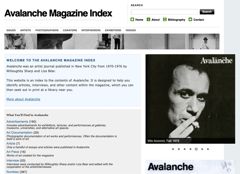
"This site is an index to Avalanche, an artist journal published in New York City from 1970-1976 by Willoughby Sharp and Liza Béar. Thirteen issues were published, one through eight in magazine format (Avalanche Magazine), nine through thirteen in tabloid newspaper format (Avalanche Newspaper).
Avalanche is closely associated with post-minimalist, post-studio conceptual artists in the United States and Europe. The journal is notable for its insistence in letting artists speak on behalf of their work and is replete with artist interviews conducted by Sharp and/or Béar, documentation of performances, and pieces created for the magazine. Avalanche is an important primary source for the study of the conceptual art scene in New York in the early 1970s. For the authoritative history of Avalanche Magazine, read Béar and Sharp’s Early History of Avalanche (London: Chelsea Space, 2005) which covers the the period when the magazine was being developed through the first two years of publication (1968-1972)."--About page.
"Marking the Museum’s entrance into online publishing, Altered States: Etching in Late 19th-Century Paris combines a scholarly collection of essays with a video glossary of printmaking techniques. The online publication compliments the exhibition by the same name that was on view at the RISD Museum June 30 –December 3, 2017.
In late 19th-century Paris, the printmaking process of etching underwent a revolutionary transformation. At a time when prints were usually made as copies of paintings rather than as original works of art, a revival of interest in etching led to greater knowledge of technique, allowing artists to experiment with subject matter and process more than ever before. The publication focuses on the creativity and experimentation that proliferated in these years, during and after etching’s revival, and the centrality in this important shift."